’89 domande a Simone Venturini – Politician (Mayoral cadidate for Venice)
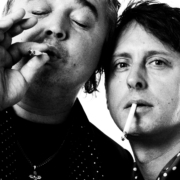
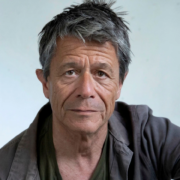
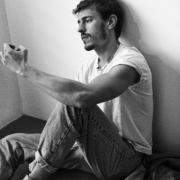
ALL THE PUNK AMORE PICTURES BY SIMONE VENTURINI ARE BY UNDERGROUND SUPERSTAR FRANCIS DELACROIX
Name? Simone Venturini.
How old are you? 38.
What’s your job? I’m the Deputy Mayor of Venice, and I’m currently running for Mayor.


What did you study? Law at the University of Padua.
What would you do to make Venice more liveable for young people? I would start with three pillars: job, housing and lifestyle. Venice needs to attract higher-value jobs, moving away from an economy tied exclusively to tourism or public sector. Then we need to address the housing issue: we need to keep investing into affordable housing, by utilizing city-owned apartments and creating opportunities for young couples, building on what we have done in recent years. Last but non least, young people need a reason to actually live in the city — which means culture, entertainment, nightlife, and spaces where they can meet, create, socialize, and truly feel that Venice belongs to them too.


Do you think turning Venice into a year-round cultural reference point for the arts — in every form, from painting to music, literature and design — rather than only during brief periods such as the recent Art Biennale, could be considered one of your goals? If so, how do you plan to pursue this? What would you do to attract musicians, filmmakers, artists and international creatives to live and work permanently in Venice? Yes, absolutely. We have worked — and will continue to work — to establish Venice as a year-round cultural destination, not just during the Biennale. To make this happen, we need to collaborate closely with cultural institutions and stop concentrating all major events into the same peak periods. We need to bring young artists here and provide them with space, time, and conditions to create within the city.
The Fondazione Musei Civici and the Biennale could offer artist residencies through public open calls — not only for visual arts, but also for photography, fashion, design, and other contemporary disciplines.
When it comes to design and craftsmanship, I would like to create a hub where artists and makers can spend three to six months, have their own atelier, produce work and sell it. It could become a meeting point between international creatives and the city — not a nostalgic Venice, but a living, contemporary one.


Venice is home to one of Italy’s most renowned fashion universities, IUAV. Would you like to attract major fashion brands to establish a permanent presence in the city and invest in the territory? Do you have any ideas on how to achieve this? IUAV’s fashion design department is a strategic asset. We need to foster a much stronger relationship between major fashion brands and the young talent graduating here. In recent years, Venice has attracted some of the industry’s most prestigious events. Now, the challenge is to turn that occasional presence into something permanent.
I would like to involve major fashion brands in the creation of an academy, also connecting them with local artisans working in fashion and traditional crafts. One of my dreams is to launch an academy supported by a leading brand to save Burano lace, before the knowledge of the last remaining lace-makers is lost forever.
In that sense, I warmly welcome the arrival of Dries Van Noten and his foundation in Venice. We should also not forget Golden Goose, which is already deeply rooted in our territory. We want to build more collaborations in this direction.


How do you think you could prevent the ongoing brain and creative drain that pushes students to leave Venice after university for larger cities such as Milan or for opportunities abroad? By creating the right conditions for them to stay. That means offering jobs that actually match their studies and ambitions, building an ecosystem that makes it easier to launch businesses and start-ups, and ensuring the city provides vibrant cultural, social, and nightlife opportunities throughout the year.
Young people don’t leave just because they want to; many leave because they feel there is no room for them. Politics has a duty to create that space.
In your opinion, what are the three things that today are most lacking for someone in their twenties or thirties trying to build a life in Venice? First, jobs that match people’s education and ambitions. Second, an ecosystem and a mindset that support entrepreneurship and start-ups. Third, opportunities for culture, entertainment and nightlife throughout the year.


Hannah Arendt argued that public space should be a place of encounter, dialogue and collective life. Do you think Venice still has genuine public spaces for young people? In this regard, many major European cities consider clubs, concerts and nightlife an integral part of contemporary culture. Do you think Venice should begin to see them in the same way? There are already places where art and creativity happen, but we can and must do more. We need spaces for students and places for experimentation that go beyond libraries and study rooms.
When it comes to nightlife, Venice is still lagging behind. My goal is to establish a nightclub, or a similar venue, in the Piazzale Roma-Tronchetto area. I already have a specific building in mind. One viable option could be utilizing the top floor of a multi-story car park as a club for young people — a model that is already highly successful in other major European cities.
Nightlife isn’t just noise that disturbs the neighborhood. Properly designed, it becomes culture, urban vitality, and one more reason for young people to stay.


According to Richard Florida, creative cities thrive when they are able to attract cultural talent. Can Venice still be a city that produces culture, or is it destined to merely host it? Venice must be a city that produces culture, not just a place where art is displayed. To do that, we have to attract new talent and give it room to work. And there are already many signs pointing in that direction.
Ateliers are fundamental. The first step is providing space: space to live and space to create. We will work to unlock public spaces that are currently unused or blocked by administrative red tape.
How would you like Venice to be remembered twenty years from now after a possible mandate under your leadership? As a fully contemporary city. Not just a beautiful destination to tick off a European itinerary, but a vibrant city that actively attracts young people, fresh ideas, businesses, and talent.


What do you think the political role of beauty should be today? Beauty should be at the centre of how we think the public space and architecture. Too often, when public administrations intervene, the only criteria considered are cost and functionality. But our cities desperately need beauty.
In Venice, beauty is already everywhere, and we have to protect it — also from the degradation caused by low-quality commercial offerings. In Mestre, the challenge is different: there are entire neighborhoods to regenerate. That is where beauty can become social policy, rather than just decoration.
What do you think about cloning? Would you get cloned if you had the chance? Cloning scares me quite a bit. No, I would not get cloned.


If you were a character in a movie, which one would you be? Kevin from Home Alone.
Do you think, for example, that killing an ant is the same thing as killing a dolphin? In other words, do you think that the lives of living beings are all on the same level, or do you evaluate them on the basis of their functionality in relation to human beings? In principle, I think their lives have equal value. Theoretically, yes, it is the same thing. But in everyday life, nobody truly lives by that principle with absolute consistency.
I would never kill a dolphin. On the other hand, I do occasionally kill mosquitoes.


In your opinion, is it right that states exist? Or would you prefer a world and humanity united under one “flag”? Ideally, a world without borders, flags, or divisions would be beautiful — just as John Lennon sang in Imagine. But history teaches us that human beings naturally tend to organize themselves into groups.
The real challenge is encouraging states to cede more sovereignty to supranational institutions. We see this with the European Union, which should become increasingly central, or the United Nations, despite all its current limitations and crisis of representation. Otherwise, we risk a world where only the law of the strongest prevails.
Can you give us a definition of art? Art is the attempt to convey a message to the world. It’s a language without borders.


Your favorite style icons? JFK.
What’s your best talent? Diplomacy, leadership, and the ability to build a cohesive team.
If you could speak to the whole world for 15 minutes, what would you say? I would invite the world to come to Venice and its mainland not just as tourists, but with investments, companies, and businesses. Venice must evolve into a fully contemporary city.
What is your motto? “Twenty years from now you will be more disappointed by the things you didn’t do than by the ones you did do.” — Mark Twain.


If you could have a superpower, what would you choose? Time travel. I love history, so being able to move through time would be the ultimate superpower.
When, in your opinion, can you define a person as an artist? When that person leaves a lasting mark on a community through their work. When their message truly starts breaking through.
Do you think that believing in God and not believing in God start from the same presumption about something that, in itself, we have no possibility of knowing, thus reducing even atheism to an act of faith toward the unknown? It is a perspective I hadn’t really thought about before, but yes, it makes sense.
If you were not in your profession, what work would you have wanted to do? I would have gone into finance and the stock market.
If you could go back in time and kill one person, who would it be? Hitler.
Do you think human life has meaning? Yes. Human life is the greatest good of all.
What do you think people say about you? It depends. With the kind of work I do, I know I cannot please everyone — and I don’t think that should be the goal. Politics means making choices, and choices naturally create agreement and disagreement. However, I believe true strength lies in trying to listen even to those who don’t think like you, understanding where their criticism stems from, and never shutting yourself inside your own bubble. You don’t have to agree with everyone, but you do have to take people seriously.


Blur or Oasis? The Verve.
What’s your favorite artist? Among living artists, Anselm Kiefer. Among artists from the past, Carpaccio.
If you could choose which historical era to live in, which would you choose? Britannia after the fall of the Roman Empire.
If you could spend a day with a historical figure, who would you choose? Alexander the Great.


Where did you go on vacation when you were young? All over Europe.
Where are you going on vacation now? At the moment, I am not really thinking about holidays. But when I do travel, I love road trips across the United States, without a fixed destination. I like the idea of letting the journey decide where I go next — day by day, mile by mile. I also collect license plates from every U.S. state I visit: it is a small personal ritual, a way of bringing a piece of each road back home with me.


What’s the topic you are most expert in? Local administration, political economy and finance.
Have you ever been in love? Yes. I am now, in this very moment.
Where do you live? I live in Venice.
Which neighbourhood? In the San Marco sestiere.

Where are you from? I’m from Marghera, on the Venetian mainland.
Which languages do you speak? English and French, and Venetian of course.
What are your favorite places in your city? Parco Bissuola, Forte Marghera, the area around Madonna dell’Orto, the Zattere and the Lido of Venice.


Favorite movies? Mississippi Burning.
Favorite directors? Tarantino.
Favorite songs? The House of the Rising Sun by The Animals.
Favorite bands? I don’t think I could choose between Red Hot Chili Peppers and Led Zeppelin.


A famous band you don’t like? Editors.
Favorite books? The Count of Monte Cristo and Animal Farm.
Favorite artworks? Anselm Kiefer’s Questi scritti, quando verranno bruciati, daranno finalmente un po’ di luce, the monumental installation he created for the Palazzo Ducale in Venice. It was fantastic.


The material good you most desire and envy? I would love to own a historical relic — something like an ancient helmet. An object that carries time, history and the lives of the people who came before us.
The quality you would like to have and don’t have? I wish I had Roberto Baggio’s magic touch with a football — and Lorenzo Musetti’s volleys on a tennis court.
If you had the possibility to remove social networks from the world, would you delete them? Defenitely yes.
What do you think about influencers? They are people who have found a way to become successful without apparent effort. At the same time, they possess the ability to understand how relatively new communication platforms work, utilizing mechanisms that may look simple from the outside but are actually quite complex.


What’s your favorite historical character? Alexander the Great.
Favorite TV series? Band of Brothers, Succession, The Newsroom, House of Cards and Chernobyl.
If you were an animal, which one would you like to be? A horse.
What’s your favorite city in the world? Montreal or New York.
Do you believe in any religion? Yes, catholic.
What’s the first thing you would do if you won the lottery? I would split the jackpot: I would invest two-thirds of it, and enjoy the rest immediately by travelling.
Your favorite dish? Pasta carbonara.
Favorite fashion brand? I like vintage Hermès ties.


How important is it for you to be rich, from 1 to 10? 3.
And fame? 6.
And what about beauty? Not applicable in my case.
And intelligence? Still working on it.
The smartest person you know? Silvio Campara, Golden Goose’s CEO, with whom I had a very interesting public talk a few days ago. He is one of the most positive, energetic and inspiring people I have ever met.
The most precious material thing you own? If we mean the thing with the highest economic value, it’s my car: an 11-year-old Golf that I use to get around the city.
What do you usually drink at the bar? Cynar Spritz.
What advice would you give to someone who wants to do your job? Don’t do it! Jokes aside, my advice is to be ready for a lot of sacrifice. But I also hope everyone has the courage to chase their own dreams — even the difficult ones, even those that may look irrational from the outside.
What do you think about the existence of royal rulers by birthright? I think it belongs to another time.
Favorite restaurant and bar in the city where you live? I love Do Forni. It has so many stories to tell — about its guests, its history, and all the moments in which, in its own way, it has been a part of the life of the city.


Your ideal holiday? A road trip across the United States.
What do you think about cancel culture? I find it humanly stupid — a modern form of iconoclasm. Of course, people must be held accountable for what they say and do. But erasing someone, removing complexity and judging the past solely through the moral categories of the present — that is not justice, and it is not culture.
What would you answer to the dilemma of the Mandarin of Chateaubriand, later taken up by Balzac and countless other philosophers? In this case, if in order to fulfill any of your desires, you had to end the life of a person extremely distant from you, about whom you know nothing, without them suffering and without anyone ever knowing, would you do it? No. I would spend the rest of my life living with guilt.

If you could choose one person you know to read this interview, who would it be? My wife — also because we still have to choose our next road trip together.